


Commissioners reject moratorium but say discussions over water use, power demand and future regulations will continue
By Allison Peck
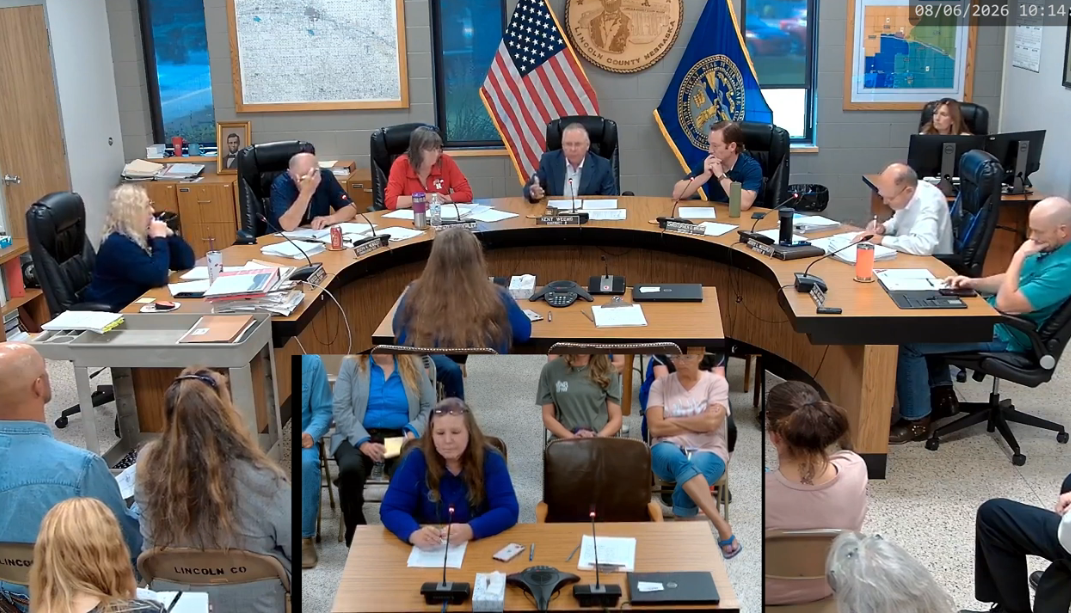
NORTH PLATTE, Neb. — Lincoln County commissioners voted 3-2 Monday against a proposed temporary moratorium on data center development, with much of the discussion centering on whether the county already has sufficient regulations in place to evaluate future projects.
The board considered Resolution 2026-21, which would have placed a temporary moratorium on data center development while county officials continued studying potential impacts and reviewing local regulations.
Commissioners Micaela Wuehler and Kent Weems voted in favor of the moratorium, while Joe Hewgley, Chris Bruns and Jerry Woodruff voted against the measure.
Throughout the discussion, commissioners repeatedly emphasized that the vote was not about whether data centers should be allowed in Lincoln County.
"We're not really here today to decide whether we're going to let a data center come in or not," Weems said. "That's not what this conversation is about."
Weems noted that data centers are already addressed in both Lincoln County's zoning regulations and comprehensive plan.
"What we're here today to decide about is if we are comfortable with what we have in our regulations. Is it enough to protect us? Does it give us the leverage, if and when an application is filed, to control how it comes in?" he said.
Planning and Zoning Administrator Judy Clark told commissioners Lincoln County has been studying data centers for years and already has regulations in place that would apply to future projects.
"I have been researching data centers for probably about two years now," Clark said. "It's not a new thing."
Clark pointed to the county's zoning regulations, comprehensive plan and recently adopted soils overlay districts as examples of protections already in place.
"The shot clock... I hate LB663," Clark said, referring to the state's permitting timelines. "If a data center were to come tomorrow, which it is not — guarantee you I do not have any applications on my desk whatsoever — could we control it? Would we be okay? Yes. My answer is yes."
At the same time, Clark said additional regulations would be beneficial.
"Do we need better regulations? I would definitely agree," she said.
Clark told commissioners county staff has already begun drafting potential updates and plans to gather additional information from Nebraska Public Power District and the Twin Platte Natural Resources District during a Planning Commission meeting scheduled for Tuesday evening.
The discussion frequently returned to concerns raised by residents regarding water use, electrical demand, setbacks and noise.
Bruns asked Clark whether the county could currently place restrictions on those issues.
"We can put left and right guardrails on these developments that protect the concerns from the farmers and ranchers that I've heard from when it comes to water and electricity and setbacks and sound," Bruns said. "We can do that today, no matter the scale, correct?"
"We can do that today," Clark responded.
Later, Bruns asked whether Lincoln County could already regulate water use, require on-site power generation, establish setbacks and require separation between industrial and residential areas.
Clark answered "correct" to each question, adding that those authorities already exist under current regulations.
Weems said he remained concerned that the county's regulations do not adequately distinguish between smaller data centers and large hyperscale facilities.
"It is very bothersome to me that we don't define in our regulations the difference between the small and the mega," Weems said.
He also cited concerns raised by constituents and his desire to gather additional information before the county is potentially required to act under state permitting timelines.
"Their lifeblood is water," Weems said. "We don't have any oil and gas. We just have water. That's it."
The discussion also touched on comparisons to Lincoln County's earlier review of wind and solar regulations, which took several years to complete.
However, Bruns noted those circumstances were different.
"I want to remind everybody here, including the commissioners at the table, the reason it took three years on wind and solar wasn't for this reason," Bruns said. "It was because we were waiting for our comprehensive plan, including zoning. That's the reason it took three years."
Bruns said that work has already been completed and now serves as the framework for evaluating future development proposals, including data centers.
Despite the failure of the moratorium resolution, county officials indicated work on data center regulations will continue.
"No matter what you do today, we're going to move forward with looking at regulations," Clark said. "It does not matter what you do. We are looking at regulations changing it, no matter what."
The Planning Commission is expected to continue gathering information and discussing potential regulatory updates in the coming months. The next Planning Commission meeting is scheduled for tomorrow evening, June 9.