


By Allison Peck
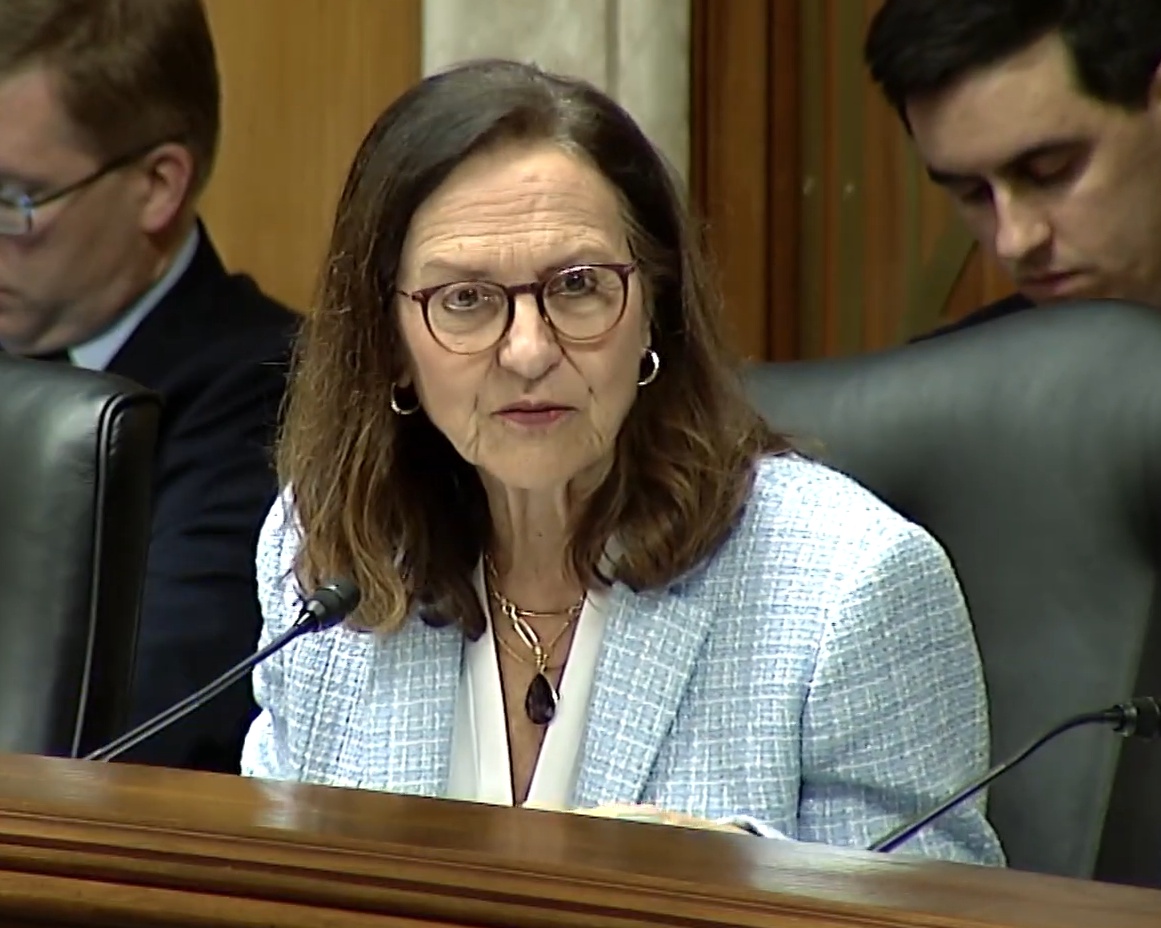
WASHINGTON — U.S. Senator Deb Fischer of Nebraska voted in support of legislation aimed at preventing customers from bearing the cost of energy infrastructure needed to serve large data centers.
Fischer is a cosponsor of the Ratepayer Protection Act, introduced by U.S. Senator Jon Husted of Ohio. The legislation would establish a federal standard states could consider when connecting large-load data centers and hyperscalers requiring 100 megawatts or more of peak demand at a single facility.
“We’ve heard concerns from Americans across the country about the impact data centers could have on their energy bills,” Fischer said. “Senator Husted has worked hard to address this, but Senate Democrats put politics over a real solution. I was proud to cosponsor and support the bill, and I remain hopeful we can still get it to President Trump’s desk.”
The bill passed the U.S. House of Representatives on September 16 by a vote of 417-3. It was then considered by the Senate, where Fischer voted in support.
Under the legislation, large-load data centers would be expected to cover the full incremental costs of generation, transmission and distribution upgrades required to serve their operations. That could include infrastructure such as new high-voltage transmission lines or generating capacity needed because of a facility’s energy demand.
The bill also calls for contracts between large-load data centers and utilities to include financial assurances designed to protect customers if a company reduces its energy use, scales back a project or leaves a community after infrastructure has been built.
The legislation does not require states to adopt a specific rate structure or agreement. Instead, it establishes a federal standard states could use as they determine how large data center projects should be connected to the electric grid.
Supporters of the measure say the goal is to prevent existing utility customers from being left responsible for infrastructure costs associated with a single large energy customer.